The time is now... patiently I await the release of this weekend's WOD's. I am calm, but the energy inside me mounts. All I need, I already have. In this moment, I am whole, complete and perfect.
The Importance of a Positive Power-to-Weight Ratio
BY MARK TWIGHT
Size matters, but not necessarily the way you want it to. Relative strength (positive power-to-weight ratio) is more important than absolute strength for functional movement. If one trains in a manner that causes muscle hypertrophy (increased size) in order to bench or squat greater weight the ability to run or do pull-ups is compromised. At Gym Jones we stress this concept by combining a big guy move (deadlift) with a little guy move (pull-ups) in single effort. The movements, loads, effort and recovery intervals we use are designed to stimulate increases in myofibril density, the fibers that actually contract rather than increases in sarcoplasma volume, which merely enlarges the muscle due to fluid volume increases without necessarily making it stronger.
We do this because, for most of the athletes we train muscle recruitment (neurological efficiency) is more important than muscle volume. An average person is able to contract a meager 30% of any active muscle when giving his utmost. Top athletes can engage 50% so the muscle must be twice as large as would be necessary if he could activate 100% of the muscle. Improving the ability of nervous system to synchronize the electrical impulses that cause the muscles to contract and act in concert produces greater capacity to generate power than does merely increasing the size of those same muscles. And the athlete remains lighter, which places less stress on the system during locomotion. Maintaining minimum muscle volume also improves oxygen efficiency; when running uphill a big upper body, though not being used demands constant delivery of oxygen and fuel sources, robbing the legs of that same blood and reducing their capacity to produce force and continue doing so.
To illustrate our reasoning I will use my own experience as an example. Many of the training methods or ideals at Gym Jones develop from lessons learned by climbing on the hardest and highest mountains of the world. The benefits of training the maximum possible strength into the minimum body mass and weight are immediately apparent to the climber. Attaining this ideal should be attractive to other athletes as well. And my experience as a climber is easy to extrapolate to other athletic disciplines.
Most successful mountain climbers and those indigenous to the mountains are relatively small in stature with efficient rather than large musculature. In my prime speed climbing period I weighed 148lbs (5'9") and was able to gain 4000'/hour on foot. At 165lbs the best I could manage (on foot) was 3400'/hour and this pace was achieved following an 18-month period during which I consciously shed upper body mass, shifting muscle and energy supply to my legs. Then, after coaxing the muscle from my legs back to my upper body while maintaining 165 pounds I lost approximately 8% of my ability to gain altitude, falling back to 2900-3000'/hour. I was faster when I was lighter and I could still carry a pack and pull almost twice my bodyweight on the lat pull machine. My fitness was very sport-specific, which is to say that I was imbalanced, and weak in areas not applicable to climbing. I could only bench press 65% of my weight, I could not do dips, and though I had pretty abs I had no genuine core strength.
During 2003-04 I modified diet and training, aiming for better balance. Although I dropped to 152 pounds, I can easily bench my weight, clean and jerk more than bodyweight, deadlift more than twice my weight, do more than 20 (strict) pull-ups, and gain more than 3500'/hour. I have found a better balance. Each athlete must find an acceptable compromise power/weight ratio that does not cost him dearly in during any particular task.
The power-to-weight ratio is important to the sports requiring locomotion; the cyclist that generates 400 watts of power with a 145-pound frame is more efficient than the cyclist that creates the same force with a 180-pound body. The 200-meter runner who can deadlift 3x bodyweight runs faster than the sprinter who can only deadlift 2x bodyweight. The runner's size/weight does not determine the one-rep max instead it is the neurological pathways and ability to recruit a greater percentage of existing muscle that are decisive factors. Because of this an athlete may develop the ability to generate incredible power without significant size or weight increase - by simply making the appropriate neurological pathways more efficient.
Relative strength can also determine how individuals integrate into a team. In the military context, every soldier wants to be strong and in an effort to become strong many get big as well. So how does the 230-pound guy integrate into the team? He's strong enough to hump heavy loads all day or carry a casualty. But what if he gets shot or sprains an ankle and his teammates have to carry him, and his gear? This same issue affects mountain climbers and backcountry skiers who often operate in remote areas and must be 100% self-sufficient, fire fighters, SWAT cops, etc. To be sure, fitness is an individual concept but each individual's fitness, size and speed can make the team more capable and flexible or less so.
So size matters, but bigger is not necessarily better, nor is bigger always stronger.


 | Frequently Asked Questions About Dihydrogen Monoxide (DHMO)What is Dihydrogen Monoxide? |
For more detailed information, including precautions, disposal procedures and storage requirements, refer to one of the Material Safety Data Sheets (MSDS) available for DHMO:
| Yes, you should be concerned about DHMO! Although the U.S. Government and the Centers for Disease Control (CDC) do not classify Dihydrogen Monoxide as a toxic or carcinogenic substance (as it does with better known chemicals such as hydrochloric acid and benzene), DHMO is a constituent of many known toxic substances, diseases and disease-causing agents, environmental hazards and can even be lethal to humans in quantities as small as a thimbleful. |  |
 | Research conducted by award-winning U.S. scientist Nathan Zohner concluded that roughly 86 percent of the population supports a ban on dihydrogen monoxide. Although his results are preliminary, Zohner believes people need to pay closer attention to the information presented to them regarding Dihydrogen Monoxide. He adds that if more people knew the truth about DHMO then studies like the one he conducted would not be necessary. |
A similar study conducted by U.S. researchers Patrick K. McCluskey and Matthew Kulick also found that nearly 90 percent of the citizens participating in their study were willing to sign a petition to support an outright ban on the use of Dihydrogen Monoxide in the United States.
| Critics of government often cite the fact that many politicians and others in public office do not consider Dihydrogen Monoxide to be a "politically beneficial" cause to get behind, and so the public suffers from a lack of reliable information on just what DHMO is and why they should be concerned. |  | Part of the blame lies with the public and society at large. Many do not take the time to understand Dihydrogen Monoxide, and what it means to their lives and the lives of their families. |
Unfortunately, the dangers of DHMO have increased as world population has increased, a fact that the raw numbers and careful research both bear out. Now more than ever, it is important to be aware of just what the dangers of Dihydrogen Monoxide are and how we can all reduce the risks faced by ourselves and our families.
 |
|
| 
|
 | A recent stunning revelation is that in every single instance of violence in our country's schools, including infamous shootings in high schools in Denver and Arkansas, Dihydrogen Monoxide was involved. In fact, DHMO is often very available to students of all ages within the assumed safe confines of school buildings. None of the school administrators with which we spoke could say for certain how much of the substance is in use within their very hallways. |
| In spite of overwhelming evidence, there is one group in California that opposes a ban on Dihydrogen Monoxide. TheFriends of Hydrogen Hydroxideis a group that believes that the dangers of DHMO have been exaggerated. Members claim that Dihydrogen Monoxide, or the less emotionally charged and more chemically accurate term they advocate for it, "Hydrogen Hydroxide," is beneficial, environmentally safe, benign and naturally occurring. They argue that efforts to ban DHMO are misguided. Friends of Hydrogen Hydroxide is supported by the Scorched Earth Party, a radical and loosely-organized California-based group. Sources close to the Scorched Earth Party deny any outside funding from government, industry or pro-industry PACs. |  |
Recently, attention has been paid to the subject thanks to an incident in Aliso Viejo, California. This so-called Aliso Viejo Incident was widely reported in the media, although the director of DHMO.org, Dr. Tom Way, was called a "prankster." Once the Associated Press started circulating the story, it became fact, and the valuable information being provided by the DHMO.org website was deemed to be "rubbish" rather than an honest and unbiased recounting of facts about a dangerous, life-endangering chemical compound.
If you are a member of the press, you may access our online Press Kit. See the main page for access information. This resource is for members of the press only.
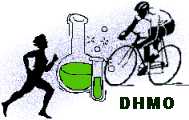
One technique commonly used by endurance athletes in sports such as distance running and cycling is to take a large amount of DHMO immediately prior to a race. This is known within racing circles to dramatically improve performance.
Sports-medicine physicians warn that ingesting too much Dihydrogen Monoxide can lead to complications and unwanted side-effects, but do acknowledge the link to improved performance. DHMO is not currently considered a banned substance, so post-race urine tests do not detect elevated or abnormal levels of DHMO.
 | This is a popular myth, but one which is also actually supported by a number of scientific facts. Dihydrogen Monoxide plays an instrumental role in the centers of the brain associated with feelings of emotional attachment and love. Married couples have found that regular ingestion of DHMO can improve their marriage-related activities, while couples that never ingest DHMO often find that their marriage suffers as well. |
 | Watch for these symptoms:
|
A recently noted medical phenomenon involves small amounts of DHMO leaking or oozing from the corners of the eyes as a direct result of causes such as foreign particulate irritation, allergic reactions including anaphylactic shock, and sometimes severe chemical depression.
| Recently, German analytical chemist Christoph von Bueltzingsloewen at the Universitaet Regensburg identified what may be key reasons why the dangers of DHMO are ever present. According to von Bueltzingsloewen, the chemical separation of dihydrogenoxide from the hazardous oxygendihydride is extremely difficult. The two similar compounds curiously occur in nearly equimolar distribution wherever they are found. It is not clear how the two contribute directly to the dangers inherent in Dihydrogen Monoxide, although von Bueltzingsloewen believes that a synergetic mechanism, catalyzed by traces of hydrogenhydroxide, plays a major role. |  |
Second, exercise caution when there is the potential for accidental inhalation or ingestion of DHMO. If you feel uncomfortable, remove yourself from a dangerous situation. Better safe than sorry.
Third, don't panic. Although the dangers of Dihydrogen Monoxide are very real, by exercising caution and common sense, you can rest assured knowing that you are doing everything possible to keep you and your family safe.
There are a number of sites on the world wide web that contain more information on DHMO and related topics. It should be noted that we do not endorse these sites, nor do we control their content or political bias.